The vision of a rail trail connecting Parkersburg to Pittsburgh is closer to reality than most people realize — and the communities closing the final gaps are ready to build.
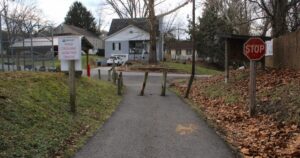
West Virginia is closing in on completing the Parkersburg to Pittsburgh Corridor — 238 miles of connected rail trail that would link the Ohio River to the Great Allegheny Passage and, eventually, to Washington, DC. Only four gaps remain across the state, with Fairmont representing one of the most significant. The city’s Planning and Development Director has committed to breaking ground on two miles of new trail to close their portion. The project received a $145,500 Appalachian Regional Commission grant combined with $140,000 in matching funds from the Just Transition Fund, the Benedum Foundation, and the City of Fairmont to develop a regional master plan for the corridor. Rails to Trails Conservancy, which has helped establish more than 40,000 miles of trails nationally, is a key partner in making the connection a reality.
The economic case for completing the corridor is well-established. A study of Morgantown’s Mon River rail trail found it generates roughly $6 million annually for the local economy — a figure that trail advocates believe could be replicated across communities along the P2P route. The broader vision connects to the Industrial Heartland Trails Coalition, which aims to link Parkersburg to Cleveland, Ohio, and Erie, Pennsylvania. For West Virginia’s North Central corridor, completing the P2P corridor would mean access to a destination-grade multi-use trail that could generate sustained visitor traffic, support trail-adjacent businesses, and position the region as a major hub in the eastern United States trail network.
About the Author