West Virginia’s outdoor economy did not appear overnight, and it is not being built on short-term wins. Beneath the trail systems, tourism strategies, and new businesses is a quieter layer of work that takes years to show results: capital investment, capacity building, and long-range coordination across towns, nonprofits, universities, and funders.
At the WV Outdoor Economy Summit, that long view came into focus. The most important projects discussed were not always the newest or flashiest. They were the ones that took a decade or more to reach a point where impact is finally visible on the ground.
Here is what that investment cycle looks like when it starts to pay off.
Fifteen Years of Building Toward a Shift
For Bill Woodrum, the most exciting developments in West Virginia right now are not abstract economic indicators. They are tangible changes in small towns: a new restaurant in Marlinton, a renovated theater, and trails bringing visitors into communities that were once overlooked.
Those outcomes trace back roughly fifteen years of patient, coordinated investment through organizations like the Mon Forest Towns Partnership and Partner Community Capital, with support from the Claude Worthington Benedum Foundation helping connect funding and reduce pressure on any single organization.
The shift Woodrum sees now is cultural as much as economic. A generation is growing up in West Virginia seeing viable paths to stay, build businesses, and invest locally instead of leaving by default.
Turning Ideas Into Viable Businesses
In the Charleston and Huntington region, Advantage Valley’s FASTER West Virginia program is focused on a different part of the pipeline: early-stage entrepreneurs.
Bryan Shaw and Marjorie Cooke work with aspiring business owners through coaching, technical assistance, and small-scale funding tools designed to bridge the gap between idea and execution. That includes everything from website support to revolving loan funds that cycle capital back into new applicants.
The pattern they see is consistent. Interest is not the issue. Sequencing is. Many entrepreneurs arrive with strong ideas rooted in outdoor recreation or tourism but need help building the structure to support them.
Twelve Towns, One Forest, One Long Timeline
The Monongahela National Forest region offers one of the clearest examples of how long this work takes.
The Mon Forest Towns Partnership began meeting in 2016, finalized its first strategic plan in 2020, and did not hire its first staff member until 2023. That timeline alone tells the story.
Josh Nease now leads efforts to connect twelve towns across more than a million acres of national forest through both physical infrastructure and shared regional planning. That includes downtown-to-trailhead connections and emerging gravel and bikepacking routes designed to link communities into a single travel experience.
The goal is not just visitation. It is making each town part of a larger, connected system where a single trip can include multiple destinations instead of just one stop.
Learn more through the Monongahela National Forest.
Building an Industry, Not Just a Moment
At WVU’s Brad and Alys Smith Outdoor Economic Development Collaborative, Danny Twilley has been tracking how quickly the outdoor economy is moving from concept to structured industry.
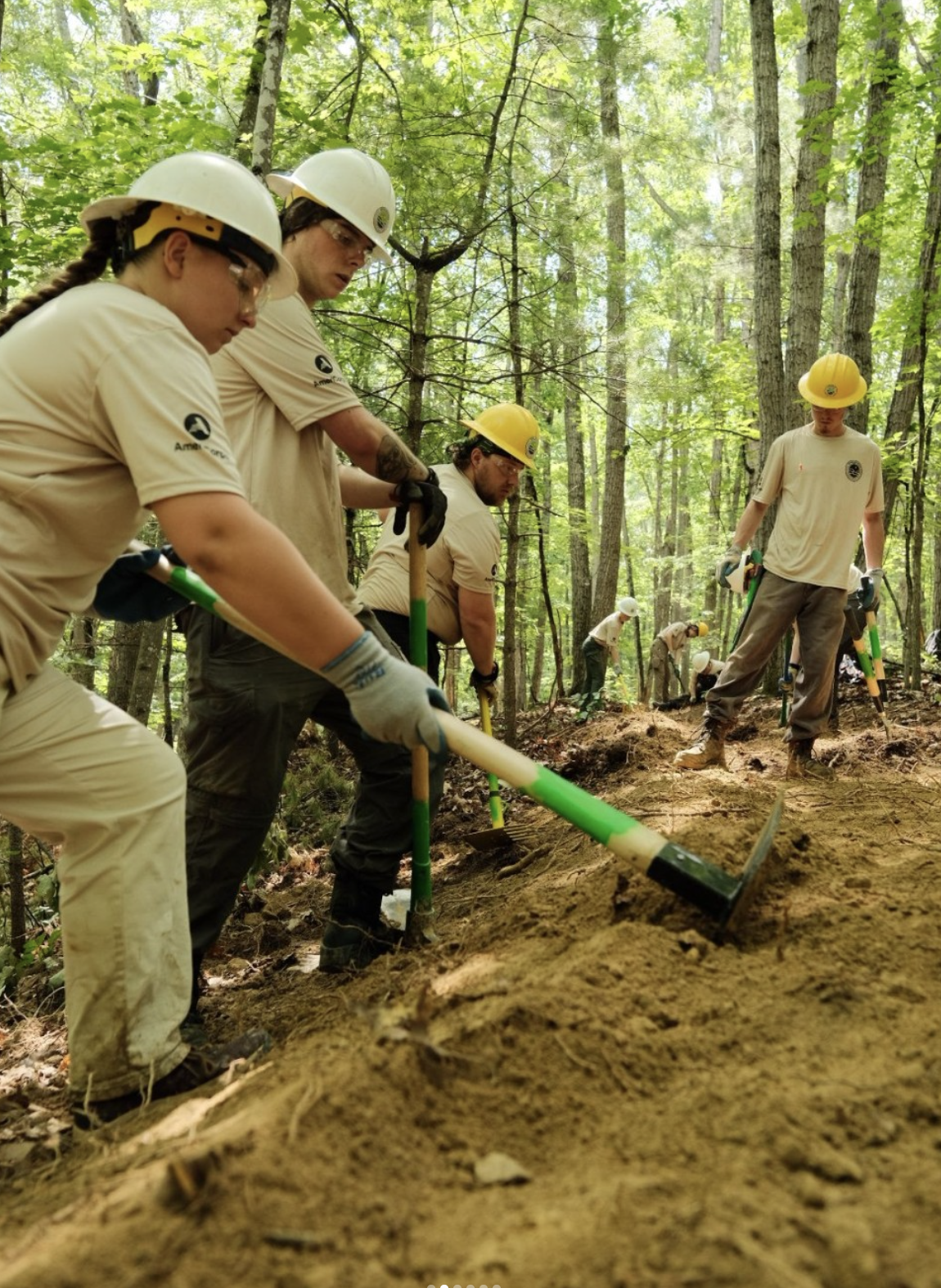
The first Outdoor Economy Summit sold out twice in one day, a signal that demand is no longer theoretical. The organization is now focused on building long-term infrastructure to match that momentum, including bike park development, trails training programs, and a planned West Virginia Outdoor Business Alliance to unify businesses operating in the space.
The emphasis is shifting from individual projects to systems. Trail building, workforce development, and nonprofit support are being treated as interconnected parts of the same economic engine.
The Long Game Taking Shape
Across philanthropy, entrepreneurship, regional planning, and university-led initiatives, the same reality is becoming harder to ignore: West Virginia’s outdoor economy is the result of long timelines finally reaching a visible return point.
The work is not driven by single projects or isolated investments. It is built through coordination over years, sometimes decades, across organizations that rarely operate in the spotlight.
What is emerging now is not the beginning of that effort. It is the moment when it starts to show itself clearly enough for communities to see the results — in towns, in businesses, and in the systems being built to sustain both.
About the Author