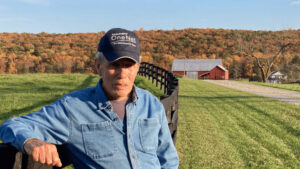
In West Virginia’s Eastern Panhandle, the Cacapon and Lost Rivers Land Trust works with landowners to keep agricultural and forest land intact — permanently. Their latest landowner story features Stephen Slonaker, a farmer whose decision to place his land in a conservation easement is less about tax strategy than about a simple conviction: that the land his family has worked through harder times than these should stay intact long after he’s gone.
CONTENT SUMMARY
Slonaker’s property sits in the Cacapon River watershed, a cold, relatively clean system that flows into the Potomac and ultimately the Chesapeake Bay. The land has been in his family across multiple generations, through the Great Depression and periods when other family properties were lost. A conservation easement with the Cacapon & Lost Rivers Land Trust means the land is legally protected against subdivision or incompatible development in perpetuity — regardless of who owns it in the future.
The story is one the Trust returns to repeatedly in its public communications: land protection isn’t an abstract environmental cause. It’s a practical tool for families who want to ensure the land they’ve invested in remains farmable, fishable, and intact. For the outdoor economy in the Eastern Panhandle, which relies on clean water in the Cacapon system for trout fishing, paddling, and recreation, these individual decisions aggregate into something meaningful — a watershed that stays capable of supporting the activities that draw people to the region.
About the Author